Taking action on travel: choosing soft mobility for an exchange in Finland
Manon Borie
Programme Grande École
As part of its climate plan, emlyon business school is working to reduce the carbon footprint associated with international mobility. Among the measures in place: the soft mobility grant, a financial aid designed to encourage students to choose low-carbon modes of transport to reach their academic exchange destination.
Manon Borie, a student of the Master in Management - Grande École, looks back on her travel experience to Finland.
Why did you choose Finland?
Manon Borie, 4th-year PGE student: Last semester, I went on an academic exchange. Initially, I wasn't particularly thinking about the Nordic countries. Reading experience reports from other students, I realised that these countries had a real Erasmus community, with many events organised for international students. That appealed to me, as it was one of my criteria for choosing a destination. So I listed several Nordic universities in my preferences and was accepted in Finland.

Why travel by train and ferry rather than by plane? What role did the soft mobility grant play?
I had already travelled using soft mobility, particularly during my involvement with NOISE emlyon. I was in charge of a microfinance mission in Morocco, and as our team wanted to reduce its carbon footprint, I travelled there without flying. That same year, also motivated by environmental values, I went to Prague by bus.
Having the time and the desire, I wanted to repeat the experience for my exchange. But despite the motivation, the financial aspect was a real issue. Low-carbon journeys are very expensive, and that almost held me back. Since the experience meant a lot to me, I would probably have taken the train for the outward journey, but I wouldn't have been able to make the full round trip without the School's soft mobility grant.
Tell us about your journey: the stages, the highlights, the difficulties…
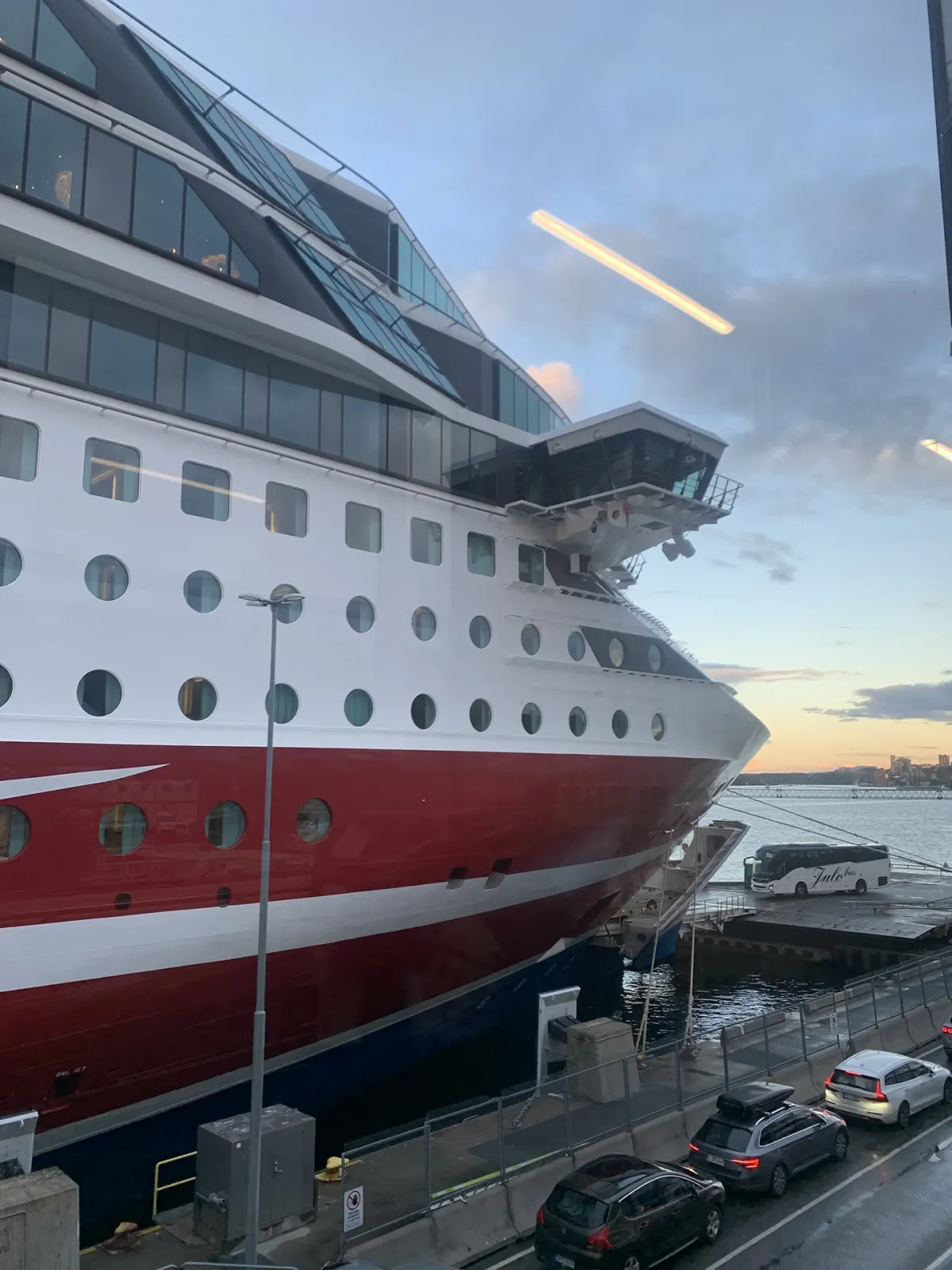
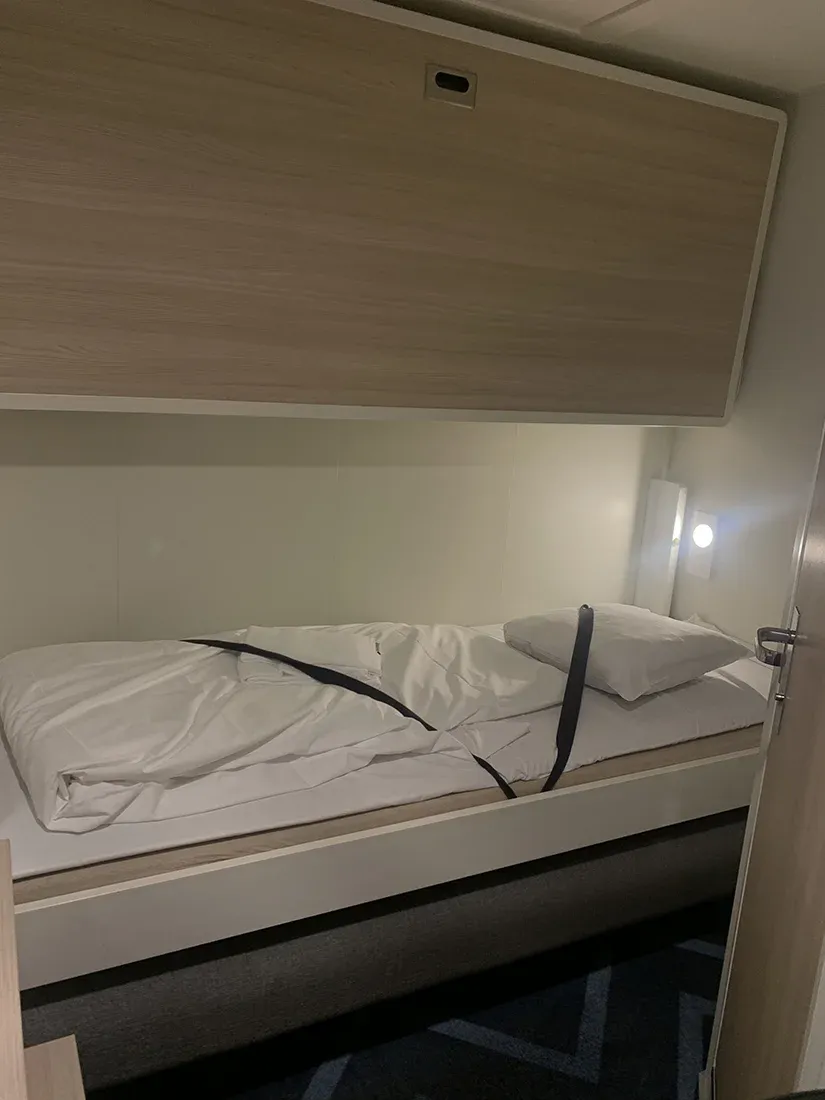
My route was the same for the outward and return trips. I left from Saint-Étienne to Paris, then Cologne, Hamburg, Copenhagen, then Gothenburg and Stockholm, before taking an overnight ferry to Turku, my exchange city. I also took advantage of some stops along the way, such as in Paris and Copenhagen.
Beyond the cities I passed through, it was the landscapes that struck me most: watching the architecture evolve, then crossing Swedish forests and lakes. You truly become aware of the territories you cross and the changing environments.
The journey also had its difficulties: adapting to foreign railway systems, delayed or cancelled trains, and carrying several months' worth of luggage for three days. Short connections and hotels without lifts made some parts challenging. Despite all of that, if I had to do it again, I would make the same choice. It's not the easy option, but it turns a journey into a real adventure.
How did you organise this trip?
I use platforms like Hourrail or Mollow for low-carbon travel ideas, as well as Rome2Rio, which suggests overland routes and links to local railway companies' websites.
Once my route was confirmed, I chose my trains. I drew up several scenarios: adjusting the departure date and the city where I would stay overnight to compare the best fares. I made sure to allow enough time between connections to anticipate any unforeseen events. It usually takes a few days because I give myself time to absorb all this information and think it through. There are many factors to consider and mistakes happen easily.
When I was sure of my route, I booked everything on the same day. Since all trains were chosen based on each other, I didn't want to risk one of them being fully booked.
As I chose to take my time, a week passed between my first search and the bookings. I booked two months in advance and should have done so earlier, as prices had risen significantly.
What has this experience changed in the way you travel?
My low-carbon journeys have deconstructed my vision of travel. Taking the leap into soft mobility demystifies this type of travel and makes it feel achievable. Before, I only looked at plane tickets because, like many people, I didn't want to give them up.
I now always consider soft mobility for my trips, as it has sometimes proved just as efficient. For example, for my trip to Prague, factoring in flight connections, the bus was cheaper and barely any longer. And if I really need to fly, I prioritise direct flights, even if it means taking the train to a different airport. This saves a flight and doesn't necessarily extend the journey.
Soft mobility isn't always about crossing Europe by train. It can involve smaller-scale initiatives. When you look into it, overland alternatives aren't always long or expensive.
What would you say to those who are hesitant about attempting a long soft mobility journey?
It won't always be the most comfortable or pleasant experience in the moment, but it's a decision you won't regret. There are also upsides: if the budget allows, it's an opportunity to discover other countries along the way.
What can make people hesitate is realising that, on an individual scale, saving one or two flights has very little impact. But you never regret a good deed, and you should keep in mind that our actions influence those of others. My decision to go to Prague without flying was partly influenced by the friend I was joining, who had travelled by bus. Conversely, a friend told me that my trips had inspired her to take her first low-carbon journey to Vienna.
A low-carbon journey, if you can afford it, can be a wonderful travel opportunity. The emlyon mobility grant is the chance to take the leap during your academic exchange.
The soft mobility grant: a lever for more responsible academic exchanges
Introduced by emlyon business school, the soft mobility grant provides financial support to students in the Master in Management Grande École and the Global BBA who undertake an academic exchange using low-carbon modes of transport (train, bus, carpooling, boat). This grant can be combined with the Erasmus+ scholarship.
The amount awarded depends on the distance travelled for a single journey, in order to support the longest routes.
Through this initiative, emlyon encourages more sustainable international mobility and supports the evolution of travel practices, in line with its commitments to the ecological transition.