Ecological Transition Consultant: Career Guide, Salary & Skills
Ecological transition consulting is a specialized form of environmental consulting that helps organizations adapt their activities to ecological and climate challenges. Conducted by ecological or sustainability consultants, often within a consulting firm, it combines scientific expertise and strategic advisory.
The goal is to reduce environmental impacts while ensuring economic and regulatory viability. Ecological transition consultants assess carbon footprints, resource use, biodiversity impacts, and compliance with environmental regulations, then design actionable sustainability strategies. This may include energy transition plans, circular economy models, and ESG or sustainability reporting frameworks. By translating environmental constraints into opportunities for innovation and competitiveness, ecological transition consulting supports companies, institutions, and territories in achieving long-term, sustainable transformation.
What Does an Ecological Transition Consultant Do?
The role of an ecological transition consultant involves supporting companies, local authorities, and organizations in their energy and environmental transition. This professional analyzes environmental impacts, defines a sustainable energy strategy, and proposes concrete actions for reducing greenhouse gas emissions. Energy transition consultants work on energy efficiency, renewable energy, sustainable mobility, and circular economy initiatives. They also help structure a coherent CSR approach that complies with regulations and climate objectives. Their role is to guide the energy transition while balancing economic performance, social responsibility, and environmental protection. This profession is at the heart of current challenges related to sustainable development and climate change mitigation.
They operate on two levels: strategic, with long-term vision implementation and technical audits, and operational, with pragmatic execution. Additionally, they ensure legal compliance in the face of continuously strengthening environmental regulations in Europe and worldwide.
What Are the Key Challenges of Ecological Transition?
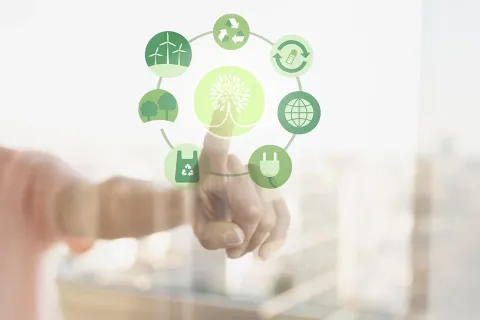
The ecological and social transition is built around five major challenges that sustainable development and ecological consultants must address. Achieving carbon neutrality requires reducing greenhouse gas emissions by 40% by 2030 and up to 75% by 2040. Ecological sobriety and the energy transition involve moving away from fossil fuels, which currently account for around 75% of global emissions. The circular economy focuses on reducing raw material consumption and waste, while protecting nature and ecosystems is essential to preserving biodiversity and resilience. Finally, the CSR/ESG approach integrates environmental, social, and governance issues into organizational strategy.
These challenges are amplified by complex environmental and socio-economic systems, evolving environmental regulations, and strict regulatory compliance requirements, particularly in public sector projects. Ecological consultants must balance environmental ambition with economic and operational constraints while managing uncertainty, stakeholder alignment, and high transparency expectations.
What Are the Core Expertise Areas of a Specialized Advisor?
A sustainable development consultant is a true expert in:
- Low-carbon strategy and carbon footprint assessment
- Life Cycle Analysis (LCA) and environmental carbon accounting
- CSR approach and ESG reporting
- Climate change adaptation and resilience
- Stakeholder mobilization and change management
- Regulatory compliance and certifications, particularly ISO 14001
What Are the Missions of a Sustainable Development Consultant?
The ecological transition consultant follows a four-phase mission cycle:
- Diagnosis and analysis: evaluating current ecological maturity and environmental impact.
- Formulating recommendations: proposing a strategic and operational action plan.
- Implementation support: supporting deployment and team training.
- Monitoring and evaluation: measuring effectiveness and adjusting actions.
What is the Role of the CSR Consultant in Ecological Transition?
A consultant in ecological transition helps organizations reduce environmental impact while creating long-term value. Their role includes defining strategies for reducing emissions, improving resource efficiency, and aligning activities with environmental and social objectives. By integrating CSR and sustainability principles into governance and operations, they generate positive social impact and support responsible decision-making. Ecological transition consultants also help organizations anticipate regulatory, climate, and resource risks, enabling them to build resilience in a context of rapid environmental change. Acting as change managers, they coordinate internal training, stakeholder communication, and the deployment of circular economy solutions. By linking sustainability performance with strategy, consultants in ecological transition transform environmental constraints into opportunities for innovation, competitiveness, and sustainable growth in complex systems.
Ecological Transition Consultant: What Profile?
The regulatory consultant focuses on regulatory monitoring and legal compliance support. They master French, European, and international regulatory texts, assist clients in implementing compliance procedures, and advise on carbon offset mechanisms or mandatory certifications. In a context where standards are multiplying (CSRD, mandatory carbon footprints, taxonomy directive), they must be environmental experts capable of transforming legal requirements into competitive advantages.
How to Become a Sustainable Development or Ecological Transition Consultant?

To become an ecological consultant, start by earning a graduate degree in environmental science, ecology, environmental engineering, or a related field. This academic foundation provides essential knowledge of ecosystems, environmental regulations, and impact assessment methods. Early in the career path, gain practical experience through internships, field studies, or junior roles in consulting firms, NGOs, or public agencies. Ecological consultants must develop strong skills in data analysis, environmental monitoring, and regulatory compliance, as well as the ability to translate scientific findings into actionable recommendations. Over time, specialization in areas such as biodiversity assessment, environmental impact studies, or sustainability strategy can accelerate progression. Continuous training, certifications, and staying current with environmental laws are key to building credibility and advancing as an ecological consultant.
What Training and Degrees Are Necessary?
Several training paths are possible: engineering schools, university master's degrees in sustainable development or environmental engineering, business schools offering CSR specializations, or specialized programs.
Among these options, the MSc in Management of Energy Transitions offered by emlyon stands out particularly. This program combines technical knowledge with managerial and strategic skills, featuring field missions and interactions with industry leaders. It trains experts capable of leading energy transformations and becoming recognized consultants in the environmental sector.
MSc in Management of Energy Transitions Brochure
What Skills are needed for sustainability consulting?
Sustainability consulting requires a balanced combination of technical knowledge, expertise in sustainable development, and strong communication skills. Consultants must master environmental data analysis, carbon footprinting, life cycle assessment (LCA), and sustainability reporting standards such as CSRD, GRI, and SBTi. Solid expertise in sustainable practices, environmental regulations, and circular economy strategies is essential to design credible, long-term solutions. In parallel, soft skills play a critical role: clear communication to translate complex sustainability data into business actions, active listening to understand stakeholder expectations, leadership to mobilize change across organizations, and creativity to develop tailored, innovative sustainability solutions that generate both environmental and economic value.
What is the Salary of a Sustainable Development Consultant?
In 2025, the average salary for an environmental consultant ranges between €40,000 and €45,000 gross per year, with significant variability depending on experience and specialization. Compensation progresses significantly with experience and expertise in the environmental sector:
- Entry-level: approximately €40,000 per year
- Intermediate: €50,000 to €65,000 per year
- Senior: over €70,000 per year
- Expert or renowned: €100,000 to €300,000 per year
What Factors Influence Compensation?
Several factors influence an ecological transition consultant's compensation, as with any profession:
- Experience and seniority
- Specialization
- Type of organization
- Nature of missions
- Location, with higher salaries in Paris, Île-de-France, Lyon, and Nantes
Where and How to Practice as an Ecological Transition Consultant?
In France, certain areas have higher demand for sustainable development consultants, notably:
- Paris and Île-de-France: high density of employers and clients
- Lyon: strong demand for renewable energy expertise
- Nantes, Bordeaux, Marseille, and Lille: seeking specialized ecological transition consultants
- Grand Est: growing demand due to territorial energy transition
Independent Consultant or Firm: What Are the Differences?
The salaried consultant in a firm offers job security, with stable salary, multidisciplinary team, and varied projects, but also demanding hours and required mobility.
The independent consultant has complete autonomy, with great schedule flexibility and high daily rates (€600 to over €3,000). However, they must prospect, handle administrative management, and deal with variable income.
Many start in firms before going independent to optimize both income and schedule.
Which Companies and Firms Are Hiring?
The sector includes several major players, namely:
- NEPSEN: independent consulting firm, 40 years, energy and ecological transition
- Auxilia: ecological and social transition consulting firm for local authorities
- Yélé: specialist firm in energy transition
- Birdeo: recruitment and HR consulting in CSR since 2010
- Enable.green: recruitment and executive search in CSR, sustainable finance, renewable energy, with offices in Paris, London, New York, and Dubai
Beyond specialized firms, consultants can be recruited in potential clients or in cross-functional firms (Deloitte Sustainability, Capgemini Invent), large organizations (industrial groups, energy companies), or local authorities and NGOs.
What Are the Career Prospects and Evolution?
Careers in ecological transition consulting are experiencing exceptional growth, driven by strengthening regulations (CSRD, mandatory carbon footprints) and climate urgency.
Main developments revolve around hybridization with data, integration of engineering (consulting + implementation), sector specialization (transport, industry, agriculture), and expertise in green technologies (cleantech, blockchain).
Career progression is rapid: junior consultant → project manager (3-5 years) → mission director (10 years) → internal CSR manager. Emerging positions related to CSRD and climate change adaptation are highly sought after, while demand far exceeds the supply of qualified talent in the environmental sector.
Key Takeaways About the Ecological Transition Consultant Profession
- Strategic and operational role: both strategic intervention and concrete implementation, mobilizing teams and stakeholders.
- Fundamental environmental challenges: carbon neutrality, greenhouse gas reduction, energy transition, circular economy, nature protection, climate change.
- Multidisciplinary training required: master's degree in engineering, environment, business, or law, ideally complemented by sustainable development specialization.
- Growing compensation: €40,000 entry-level to €100,000+ expert, disparities based on experience, specialization, region, status.
Varied and growing opportunities: specialized firms, private companies, local authorities, NGOs, independent status. Paris, Lyon, Nantes offer more opportunities, but demand is growing everywhere.