OCE – Our expertise

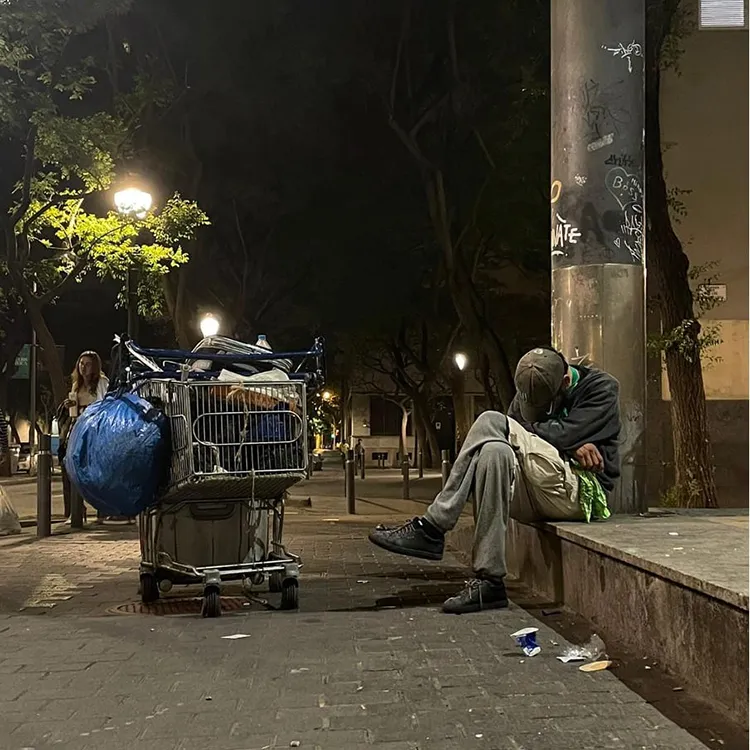
Personne assise sur un trottoir la nuit à côté d’un chariot rempli d’affaires, sous un lampadaire dans une rue urbaine.

Veus raval

Since 2012, Guillaume Dumont and Rafael Clua García (UManresa) have launched VEUS RAVAL, a five-year ethnographic project on Barcelona’s narcotics market. Its main objective is to study the narcotics market in its relationship with health, law enforcement, urban, and social policies. Specifically, the project analyzes the phenomenon of the “narcopisos”, namely the illegitimate occupation of public or private properties by criminal organizations to sell drugs to clients using them on-site. This project problematizes narcopisos as a dynamic and open-ended illegal organizational response to the intensification of drug law enforcement, pressure from local communities, limitation of harm reduction policies, and structural vulnerability.

VEUS-RAVAL is innovative in many aspects and provides theoretical and methodological developments from an interdisciplinary perspective (Anthropology, Organization Studies, Epidemiology, Criminology). It sheds new light on the organization of drug use and trafficking as the product of collective action and, therefore, moves beyond the dominant focus of existing research on People Who Use Drugs (PWUD) alone. It analyzes the networks of collaboration among the actors involved and the conventions shaping and structuring their interactions, including PWUD, cocaine, crack-cocaine, heroin, and methamphetamine dealers, police forces, harm reduction professionals, residents, drug activists, community leaders, and politicians.

VEUS RAVAL contributes to developing new knowledge on the following urgent social problems: (1) Gentrification and urban transformation; (2) Drug law enforcement; (3) Harm reduction policies; (4) Social movements and activism; (5) Intersectional structural vulnerability.
Recent publication: 

Social media

Media


Visa required

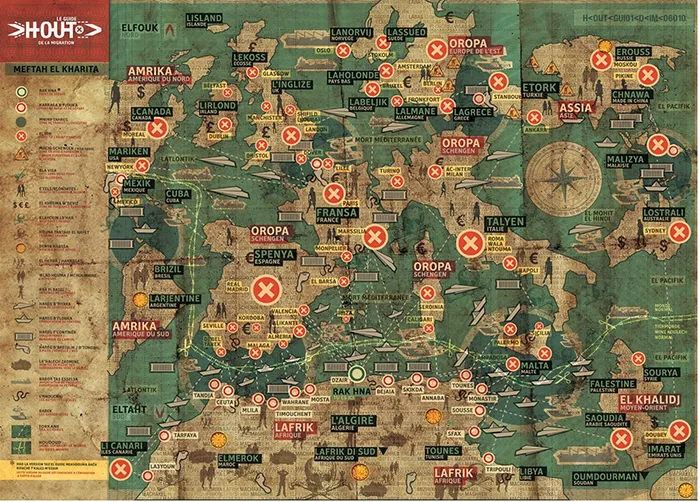
This research project from Farida Souiah focuses on visa policies and how individuals and social groups in Algeria confront them. The project is structured around three main axes:

Axis 1:

This first axis, rooted in the sociology of international relations, aims to deepen the questions initially explored in my doctoral thesis based on the Algerian context mobility and migration as diplomatic and political problems. I examine how visa policies are negotiated and implemented in postcolonial contest, interrogating the capacity of states whose nationals face mobility constraints to contest these limitations.

Axis 2:

The second axis examines how individuals and social groups experience and interpret mobility constraints. It focuses on the representations, sensations, and emotions of those caught in the mobility system. It conceptualizes borders as administrative ordeals that can be insurmountable for some. I build upon the work of Stef Jansen, on “humiliating entrapment though documentary requirements” and his anthropology of the everyday geopolitics.

Axis 3:

The third axis deal with the business of international (im)mobility analyzing illicit and licit economic organizations who play a role in the visa application process.

Carte illustrée des routes migratoires mondiales montrant l’Europe, l’Afrique et d’autres régions avec flèches de circulation et symboles de frontières.
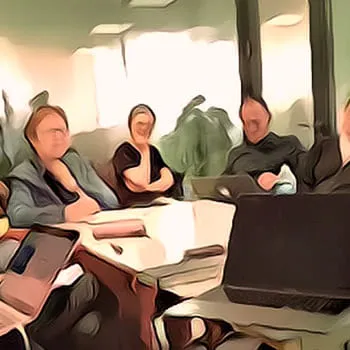
Groupe de personnes assises autour d’une table lors d’une réunion, avec un ordinateur portable ouvert au premier plan.

Rapsodia

Lisa Buchter has been taking part in the collaborative participatory action research project called RAPSoDIÂ (Recherche Action Participative, Solidarité et Innovation dans l’Âge) since 2020. This participatory action research project was co-constructed by researchers from different disciplinary backgrounds (scholars in sociology, geography, urban planning, management, etc.) and by activists who were part of the collective Hal’Âge, a French non-profit bringing together activists and researchers to explore solution to bring about concrete innovation for ageing and for fostering solidarity through collective housing. 

The project explored how various collective housing arrangements (housing cooperative, participatory house, senior-only co-living, etc.) helped foster further solidarity and promoted more interdependency among neighbors, and thus in 6 different cities in France, as well as in Belgium, Germany, and the UK. The project enters its final stage (final report) and will be valued through joint publications in the upcoming years. Lisa has already started to work with activists in different venues, and namely the academic journal Nouvelle Questions Féministes:

Buchter, L., Guinchard, M., & Le Roux, A. (2022). Remettre les vieilles de la marge au centre avec une recherche participative. Nouvelles Questions Féministes, 41(1), 83–99. 

Back on the ground

This research conducted by David Courpasson since February 2023 Involved interviews with fighter pilots and diverse personnel of military bases, + observation. Artificial Intelligence and other technologies of electronic assistance have profoundly modified the work of fighter pilots, as well as their relationship with danger and with their flying machine. 

How do fighter pilots’ identities evolve, as pilots were magnified and glorified in the past and are facing today the redefinition of “warlike virtues” and the decrease of budgets allocated for training. What about the coordination practices in teamwork that is based on perfectionism? What about the rites of conviviality in squadrons? How do new generations of pilots see their work and their future? Will there be a pilot in the plane, in twenty years, or will drones take over in the air for combat and surveillance? This research seeks to understand how war professionals adapt their collective and individual work practices, their relationship with their body, with risk, with death, when conventional war and electronic “war at a distance” are clearly in tension in strategic decision of nations.

Piste d’aéroport vue de face avec marquages au sol, s’étendant vers l’horizon sous un ciel dégagé.
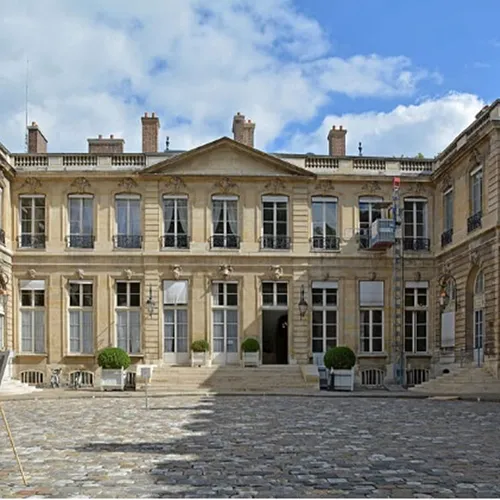
Cour intérieure d’un bâtiment historique avec façade en pierre, fenêtres symétriques et sol pavé sous un ciel partiellement nuageux.

Organising climate action

This six-month project (January to June 2022), led by Valerie Arnhold and funded by the Haut Conseil pour le Climat, looks at the process of elaboration of France’s plan to reduce greenhouse gas emissions, the Stratégie Nationale Bas Carbone (SNBC). Climate action poses major challenges for the French government: reducing emissions to achieve carbon neutrality by 2050 implies far-reaching transformations in the various sectors (Energy, Agriculture, Forestry, Waste, Industry, Transport).

This raises the question of the policy instruments and organization put in place to achieve these drastic reduction targets. Net-zero policies also require a coordination between various public (ministries, local authorities) and private actors (agricultural, industrial and energy sectors) around an objective that often calls into question previous practices and requires structural change. This project examines the organizational conditions under which climate mitigation planning takes place: which forms of cross-sectoral cooperation exist between different public actors, especially Ministries participating in the elaboration of the Strategy? How can we organize a massive mobilization around climate action? The study relies on a qualitative approach, based on interviews with the participants of the Net-Zero Strategy and various stakeholders, as well as direct observation of coordination and consultation meetings. It focuses on the power relations that are forged around the elaboration of the National Strategy and on the State’s levers for action in the climate field.

A first overview of the results of this project, in the form of an institutional report for public authorities is available here.