Experiential learning: an immersive field trip to La Défense Arena
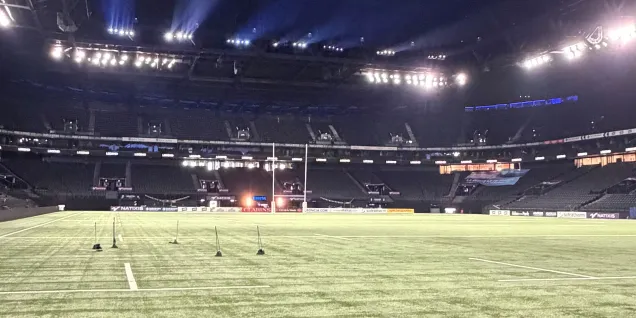
Learning about the sports and entertainment industry from a textbook is one thing. Standing inside Europe's largest indoor venue, where a sold-out rock concert can turn into a professional rugby match within hours, is quite another.
Students in the Master in Sports, Entertainment and Lifestyle recently experienced this firsthand during a visit to Paris La Défense Arena, part of the program’s hands-on curriculum. The visit was organized by alumni Wassim El May, now Head of Ticketing for Racing 92, one of France’s leading professional rugby clubs.
A venue that embodies convergence
With capacities ranging from 15,000 to 40,000 spectators, the arena can be adapted to any type of event, offering a high-quality experience for every show. It hosts everything from concerts featuring international artists and the Rolex Paris Masters tennis tournament to Olympic swimming competitions; a reminder that the boundaries between sports, entertainment, and live experience are increasingly blurred. In 2022, the final stage of the Tour de France also started from Paris La Défense Arena, before finishing on the Champs-Elysées.
The arena also holds a distinction that sets it apart from every other sports venue of its scale in Europe: its roof never opens. Fully enclosed, it offers a controlled environment year-round with no weather disruptions, consistent acoustics, and a fan experience that remains predictable regardless of the season. It also features a 1,400 m² interactive screen – one of the largest in the world. On the sporting side, the arena is also home to Racing 92, one of France’s top rugby clubs, making it a rare venue that combines elite sport with large-scale entertainment.
Its main competitors in Paris, Stade de France and Bercy's Accor Arena, are roughly twice as large and twice as small, both of which operate under very different configurations and constraints, making La Défense Arena a mid-tier giant with remarkable flexibility.
From backstage access to Match Day ambiance
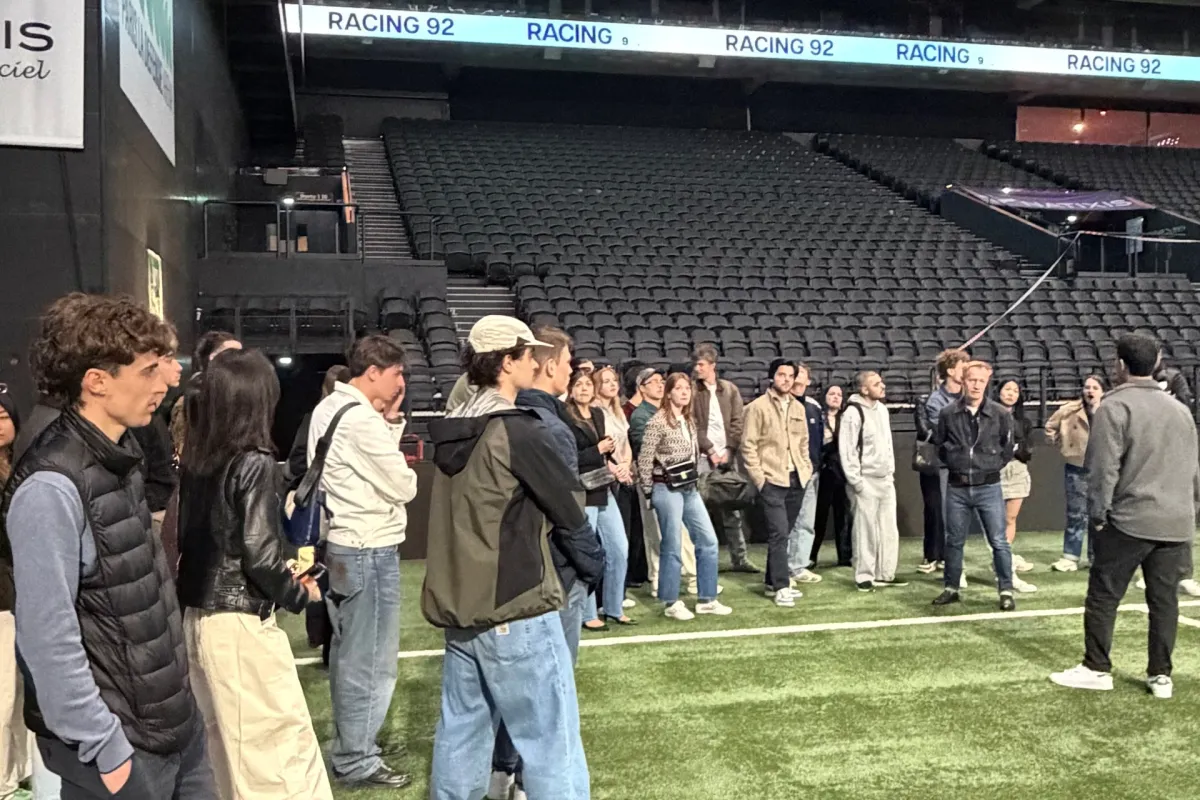
Wassim El May, program graduate, welcomed the students onto the field and offered far more than a simple tour. His career journey is a great example of the opportunities available to graduates – and his commitment highlights the strength of the program’s alumni network. He also gave students a genuine insider’s view of what revenue management looks like in a professional sports organization. As Head of Ticketing, he sits at the center of a complex ecosystem: balancing general sales, season ticket holders, sponsorship allocations, hospitality packages, and one-off buyers, all while supporting the club's broader financial strategy. Ticketing represents some of the club's revenue, with the remainder coming from sponsorship, media rights, and B2B hospitality. Fun fact: Racing 92 ends its ticket prices with .92 to reflect its home area, the number of the department Hauts-de-Seine, to reinforce its brand identity. It is also worth noting that Racing 92 is uniquely tied to a department rather than a city, making it the only professional sports club in France with that distinction.
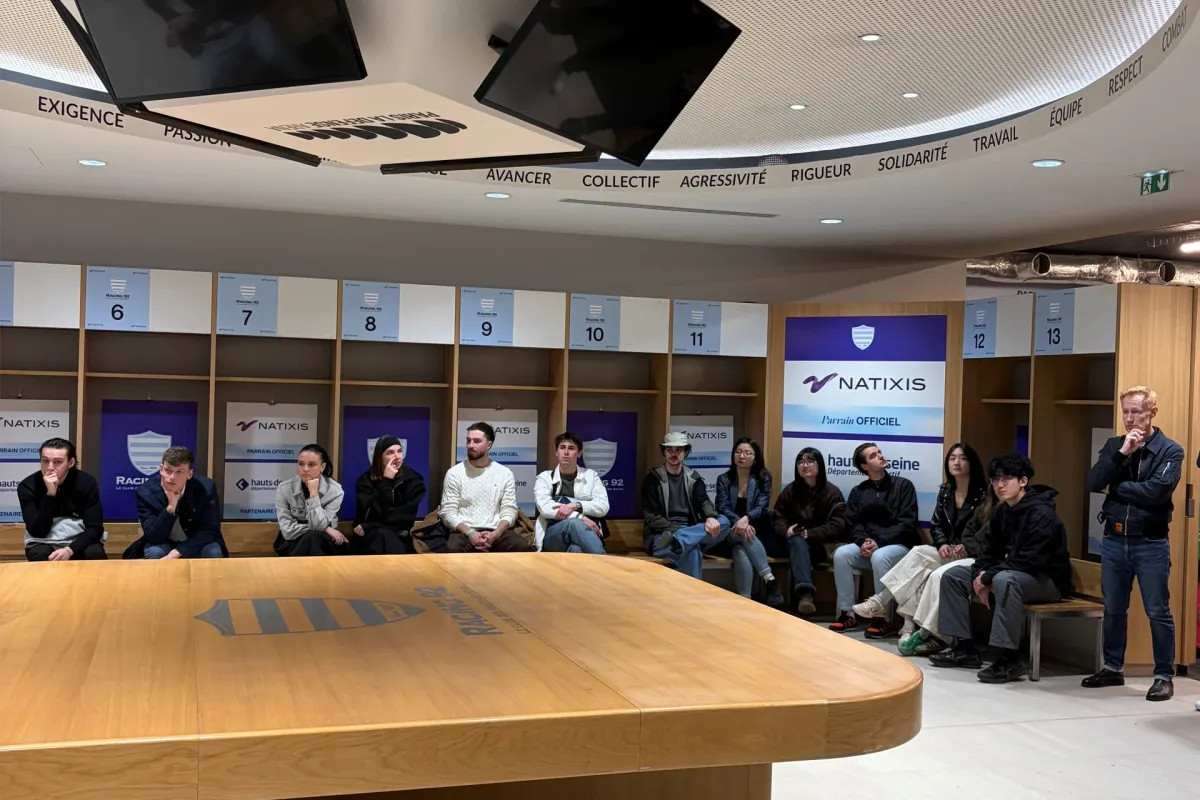
Students also toured the players’ changing rooms, the only area in the arena that remains permanently branded for Racing 92 and is never used for event production. They also explored the seating infrastructure, including hospitality lounges and multi-level seating tailored to both individual spectators and corporate clients, as well as the press facilities.
Earlier in the week, students also visited the Racing 92 training center, where they witnessed firsthand how a top-tier club prepares its athletes on a daily basis. The visit was initiated by current student Cyrien Mérand, and the cohort was welcomed by Racing 92 President Arnaud Tourtoulou.
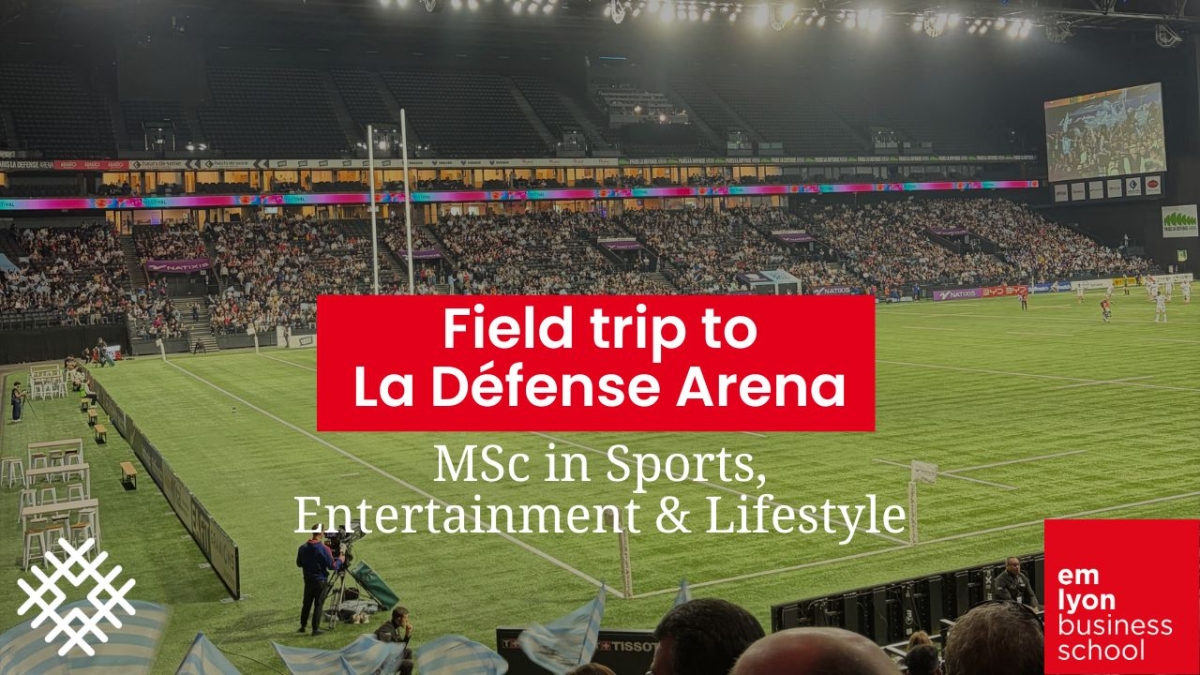
The immersion continued on Saturday, when the group was invited to attend the Racing 92 vs Castres match at Paris La Défense Arena, giving them the full experience from training ground to matchday atmosphere.
Experience as part of the curriculum
Visits like this one are a deliberate part of how the Master in Sports, Entertainment & Lifestyle program is designed. Alongside academic courses, industry conferences, and masterclasses, students are given direct access to the people shaping the field and to the venues, organizations, and decisions that define it. Walking through real venues, talking with executives, and seeing how decisions are made gives them a perspective no classroom can offer. This is how the program is meant to be lived: up close, hands‑on, and connected to the world they’re preparing to enter
This Master's goes beyond traditional sports management. It explores how digital innovation, brand strategy, and shifting consumer behaviors are transforming the way people engage with sport, culture, and lifestyle. Sport, entertainment, and lifestyle increasingly overlap, and the program is built to help students understand how these sectors influence each other and how that convergence creates real opportunities in marketing, experience design, and brand strategy.
Paris La Défense Arena, which hosts close to 80 events per year spanning sport, music, and beyond, is a living case study for that thesis. For the students who visited, it was a chance to see the theory in action and to build the kind of network that could shape their future careers.