Reference:
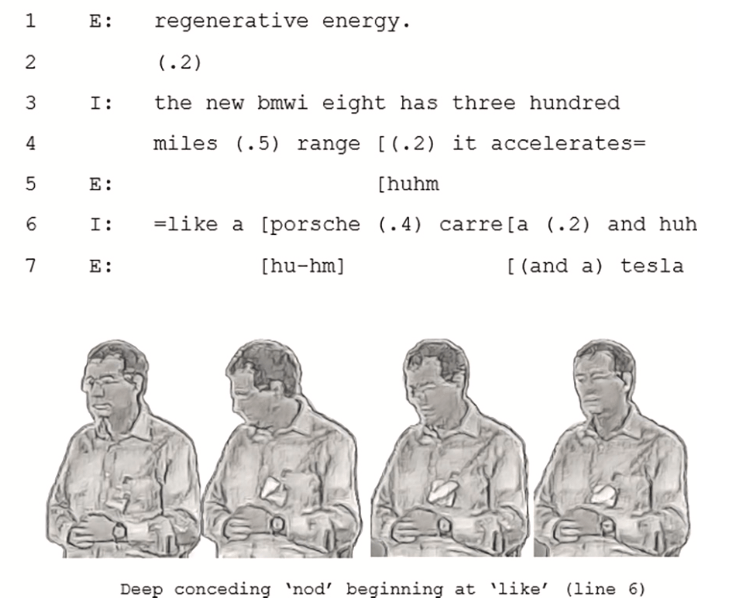
Jean Clarke and Nick Llewellyn, Stories under scrutiny: How entrepreneurs and investors negotiate entrepreneurial narratives in interactional exchanges during investment pitches. Journal of Business Venturing, 2026. https://doi.org/10.1016/j.jbusvent.2026.106604

STORM - Research
Stories under scrutiny: How entrepreneurs and investors negotiate entrepreneurial narratives in interactional exchanges during investment pitches
By Jean Clarke and Nick Llewellyn in Journal of Business Venturing
Published April 16, 2026
Community Socioemotional Wealth as the Glue that Binds Distinct Communities in Enterprising: A Tale of Success From Colombia
New article by Sonia Siraz in Journal of Management Inquiry
Apr 7, 2026

Recent advances in research have shed light on why and how community-based enterprises (CBEs) emerge. Nevertheless, little is known about the underlying factors that contribute to their success over time. This lack of attention is intriguing, given CBEs’ widespread proliferation as an instrument for socioeconomic development. We contribute to the CBE literature by applying and extending socioemotional wealth (SEW) to the CBE context. Our findings demonstrate how the presence of community socioemotional wealth (CSEW) enables CBEs to achieve enduring success. Beyond the presence of SEW’s five traditional dimensions, we identify two new dimensions (empowerment and holistic mission) unique to CBEs. When jointly present, these seven dimensions explain how CSEW creates a favorable terrain for the CBE to succeed.
Reference:
Sonia Siraz, Björn Claes, Deycy J. Sanchez Preciado, and Nicholas Theodorakopoulos. Community Socioemotional Wealth as the Glue that Binds Distinct Communities in Enterprising: A Tale of Success From Colombia. Journal of Management Inquiry, 2025.
Microlevel Judgments of Organizational Legitimacy: How Validity Cues and Categorical Fit Shape Evaluators’ Propriety Beliefs
Julia Thaler, Martin Sievert, Sonia Siraz, and Alexander Pinz in Journal of Management Studies Published
March 10, 2026

This study advances research on organizational legitimacy by examining the microlevel mechanisms through which evaluators form propriety beliefs. Building on legitimacy-as-perception research, which posits that evaluators rely on validity cues to make judgments, we argue that individual evaluators draw on broader, more nuanced sets of information than previously acknowledged. Specifically, we theorize and show how distinct validity cues (authorization and endorsement) that coexist combine with evaluators’ perceptions of an organization’s categorical fit to shape propriety beliefs. Across two factorial survey experiments (n = 1866), perceived categorical fit emerges as the strongest and most consistent predictor of propriety beliefs. Validity cues shape propriety beliefs, but their effects are far from uniform. The findings also reveal that cue valence matters and that complex interplays of validity cues distinctly influence propriety beliefs. This research contributes to legitimacy literature, and more specifically to microlevel legitimacy by offering a granular perspective on how propriety beliefs get constructed from diverse informational cues. By introducing categorical fit as a novel explanatory mechanism, we extend existing theory and encourage further investigations of how it influences microlevel legitimacy perceptions and how various combinations of validity cues can shape evaluations of organizational legitimacy.
Reference:
Julia Thaler, Martin Sievert, Sonia Siraz, and Alexander Pinz. Microlevel Judgments of Organizational Legitimacy: How Validity Cues and Categorical Fit Shape Evaluators’ Propriety Beliefs. Journal of Management Studies, 2026.
- From Place to Platform: Extended Global Cities Theory for Transnational Cultural Diffusion
- Organizational Scarring, Legal Consciousness, and the Diffusion of Local Government Litigation Against Opioid Manufacturers
- A Review of Systems Perspectives in Sustainability: How Systems Properties Convey Systems-Wide Dynamics
- Studying Culture and Meaning Through Interpretative Computational Methods: From theory to method and back
- Chinese Multinational Enterprises in a New Reality: Advancing International Business Theory
- Digital transformation and the offshore outsourcing behavior of manufacturing MNEs
- Prosperous places: Processes, policies, and practices
- Institutional exclusion: the cultural production of educational inequality through college narratives
- Leave the Token, Take the Gavel: How National Quotas and Corporate Ownership Shape Gender Diversity on Major Board Committees
- Board effectiveness and internalization benefits: Theory and evidence from value creation in cross-border acquisitions
- Market pathways to food systems transformation toward healthy and equitable diets through convergent innovation
- CEO narcissism, subsidiary top management team international diversity, and radical digital innovation in multinational enterprises
- Measuring entrepreneurial ecosystems across levels: a district approach
- Knowledge-Based Assets in Business Groups: A Dynamic Capabilities View of Complementarity and Rents
- Unlocking the Potential of EMNEs for Attaining the SDGs in Developing Economies
- Collective Leadership as ‘Plumbing and Poetry’: Navigating Paradoxical Tensions Through Community Identity Work
- Family business and international business: Breaking silos and establishing a rigorous way forward
- Cambridge Handbook of Strategy as Practice, Third Edition
- Less is More: Digital and Physical Sustainability Shortage Impact on Entrepreneurial Intention